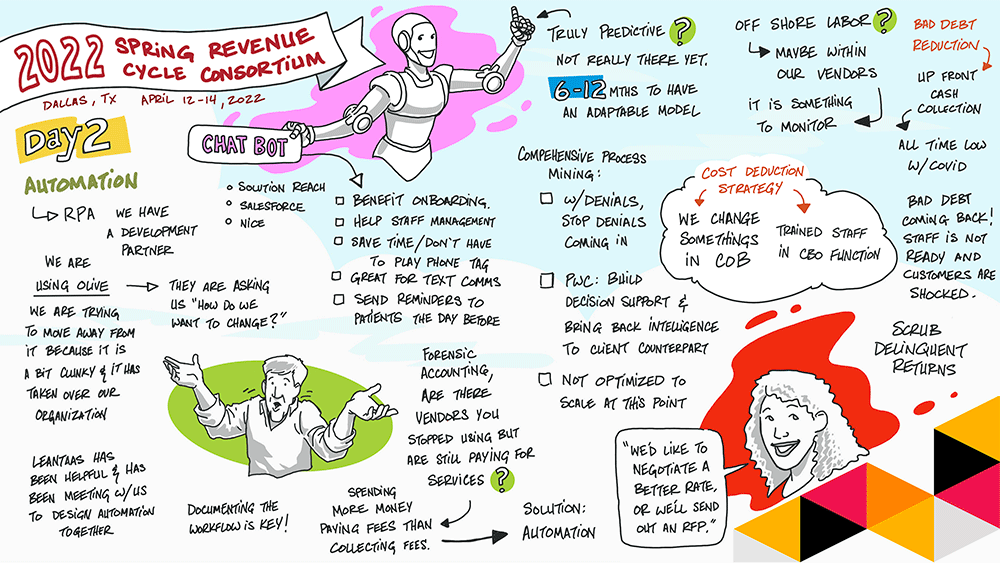
Scribe
Capgemini, The Halftime Institute, KPMG, Oliver Wyman, PwC, The Difference, and The Wildworks Group
Scribe/ Knowledge Worker
What Is Scribing?
Scribing—also known as visual scribing or graphic recording—is the practice of listening to conversations, presentations, workshops, and strategy sessions and translating the ideas being discussed into a visual story in real time. A scribe combines words, illustrations, diagrams, symbols, metaphors, and visual connections to capture the most important ideas as they emerge, making complex information easier to see, understand, remember, and act upon.
But scribing is more than simply drawing what people say. It requires active listening, rapid synthesis, an understanding of the subject matter, and the ability to recognize what is most important within a conversation. When a session is collaborative or conversational, the scribe is there to capture the voices in the room—not just the voice of the presenter. Seeing your own words, ideas, or contributions represented in the visual record can create a powerful sense of acknowledgment and inclusion. It tells participants that their perspective was heard and that their contribution is part of the collective story.
There is also a cognitive benefit to making information visual. Our brains are highly responsive to imagery and are able to form stronger associations when concepts are connected to visual cues. By pairing key ideas with illustrations, symbols, spatial relationships, and visual metaphors, scribing can make information more memorable and give people a visual framework they can return to long after a conversation has ended.
I have been working in the field of scribing for over 20 years, collaborating with a wide range of consulting firms, organizations, and teams as both a scribe and a knowledge worker. This combination of creative and analytical experience allows me to do more than illustrate a conversation. I work to understand the ideas behind it, identify the connections and themes that matter, and translate them into visuals that communicate with clarity and impact.
Whether working on a wall with markers, digitally on a tablet, or developing a visual narrative after a session, my goal as a scribe is the same: to make thinking visible, make people feel heard, and create a shared visual memory of what matters.